


Mold projects involve sensitive information such as 3D files, material, number of cavities, lifespan, surface finish, and delivery time from the RFQ stage. After deal confirmation, they go through DFM, design confirmation, mold trial, and correction. Ordinary contact forms can only receive files but cannot control access, versions, and milestones. This article breaks down a confidential RFQ, DFM review, and project progress system suitable for WordPress, and clarifies which data should not be made into public pages.
RFQ starts with project fields, not with an upload button
Injection molds, die-casting molds, and stamping molds require different fields. The form first selects the mold type, then dynamically collects part material, dimensions, number of cavities, annual production volume, target lifespan, surface requirements, injection machine information, delivery location and time. The upload area explains allowed formats such as STEP, IGES, PDF, ZIP, their sizes, and purposes, and provides NDA contact information.
After submission, an RFQ number should be generated, linking form data and files to a controlled project rather than as public media library attachments. To determine whether complex business is worth customizing, you can first followWordPress Plugin Development Evaluation GuideCheck roles, statuses, and data retention requirements.
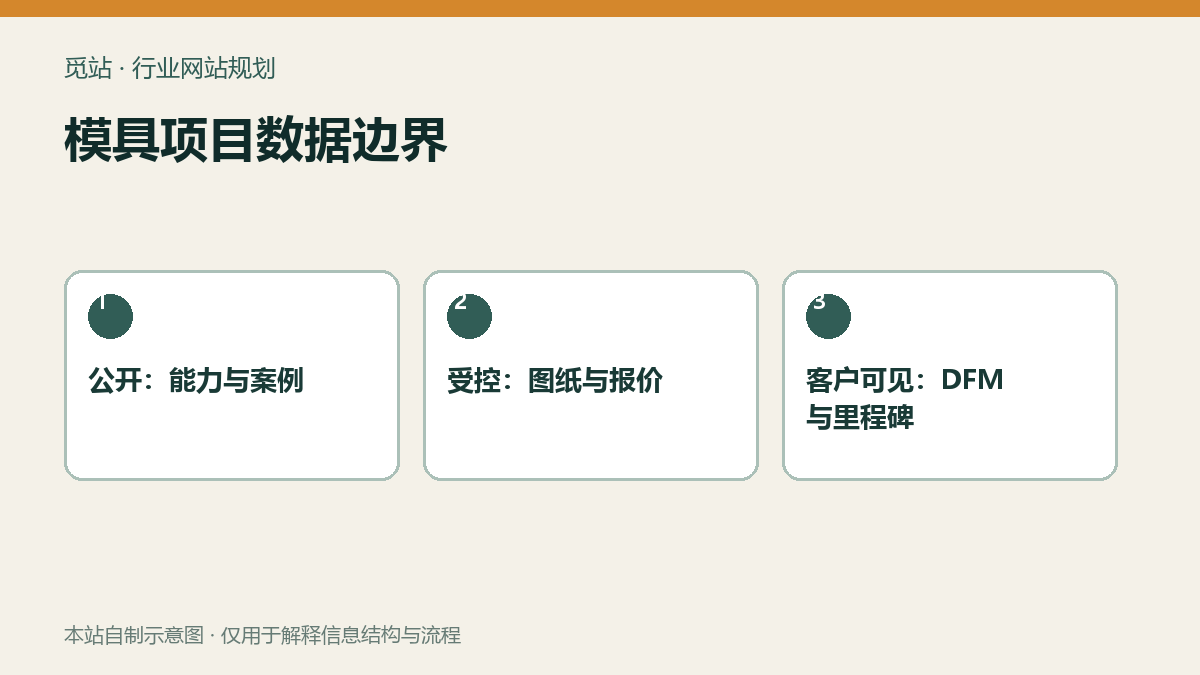
Mold project data boundaries. Source: in-house diagram, used to illustrate the information structure and process of industry websites; no external image authorization required.
File security requires multi-layer control
Checking only file extensions is not enough; you must also verify the real file type, limit size, generate random file names, and avoid storing them in publicly guessable directories; access must require login or short-term authorized links. Sales, engineering, suppliers, and customers should use different permissions, and download and deletion actions must be auditable.
Email notifications should not directly attach customer drawings; only send project numbers and backend entrance. When files expire, projects are closed, or customers request deletion, the system must have a clear retention policy and execution records. Website security basics can be combined withWordPress Foreign Trade Site Security Hardening Checklist。
Five steps to manage DFM and version confirmation
- Engineers upload DFM with version number and date, associating it with the corresponding parts and RFQ.
- Customers review issues, images, and suggestions item by item, without relying on scattered emails for confirmation.
- Record accept, reject, or require discussion for each issue, and retain operator and time.
- Freeze old versions when a new version is released, listing a change summary and items to be confirmed.
- After all confirmations, generate a read-only record, then proceed to design and manufacturing milestones.
The system does not need to edit complex CAD online, but must control files, versions, decisions, and responsible persons.
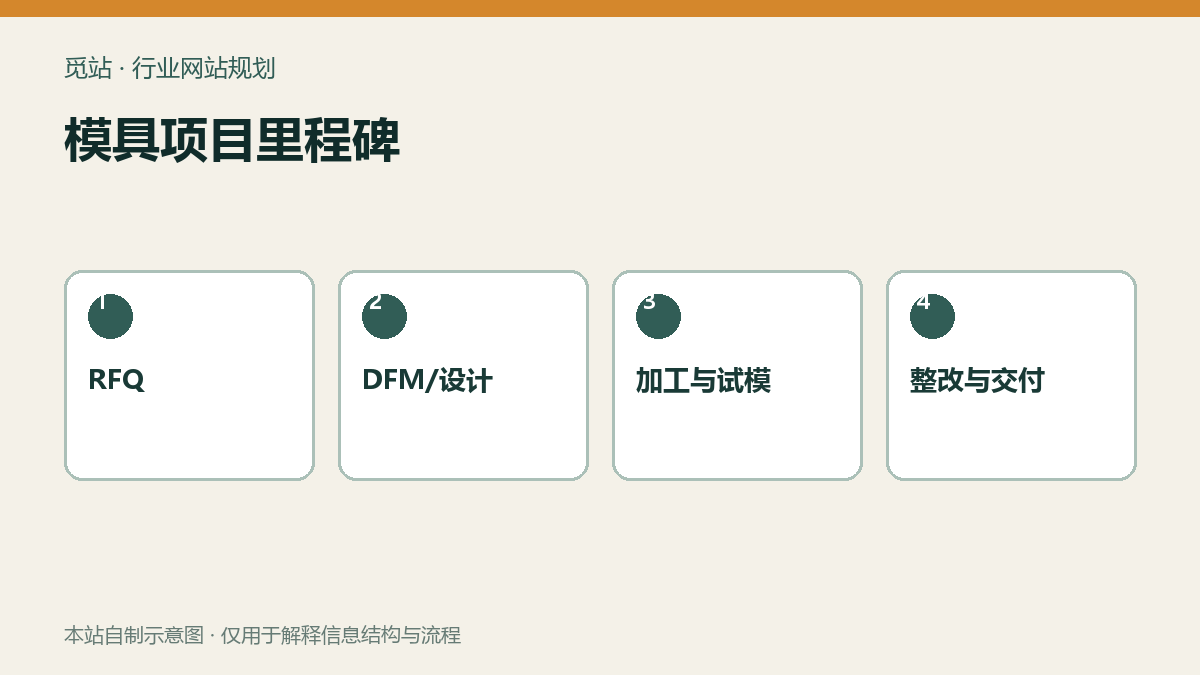
Mold project milestones. Source: self-made diagram from this site, used to illustrate the information structure and process of the industry website; no external image authorization is required.
The customer progress page only displays reviewed milestones.
The customer portal can display project status, planned dates, DFM/design confirmation, number of trial runs, sample reports, and to-do items; internal man-hours, supplier information, costs, or unreviewed notes should not be directly exposed. Status changes are first confirmed by the person in charge before triggering customer notifications.
Before portal release, database and file backups must be performed and the recovery process verified; refer toWordPress database and file recovery tutorial。
Functional acceptance checklist
- Whether different mold types display their respective required fields
- Whether uploads have a whitelist, type validation, size limit, and random file names
- Whether customer drawings cannot be accessed directly via public URLs
- Whether DFM has versioning, change summary, and item-by-item confirmation records
- Whether the customer portal filters internal costs, suppliers, and private notes
- Whether there are rules for file retention, export, and deletion after project closure
Frequently asked questions
Can mold RFQ files be placed in the WordPress media library?
They should not be handled as ordinary public media. Controlled storage and permission checks should be used to avoid guessable URLs, and access and deletion should be logged.
Does the customer portal need to display all production statuses in real time?
No. Only display milestones reviewed by the project leader and meaningful to the customer; internal notes and cost data must be isolated.
Is it necessary for DFM to edit CAD online?
Not necessarily. The primary goal is to manage DFM file versions, issue items, customer decisions, time, and responsible persons; complex CAD can still be produced with professional tools.
Join the discussion
You must log in to post a comment.
After logging in, you can join the discussion. New users can register an account for free.
Do not post spam comments, advertisements, or content with malicious links. Comments must comply with relevant laws, regulations, and community guidelines.