


CNC machining customers are not here to browse slogans about “company strength”; they want to quickly determine whether equipment travel, material experience, tolerances, surface finishes, inspection capabilities, and lead times match their needs, and to securely submit drawings. This article organizes these evaluation points into a website structure, case templates, and an RFQ process to help machining companies turn visits into assessable project leads.
The homepage should first answer "Can you make this?" — don't start with factory history.
On the first screen, summarize core capabilities in one sentence — for example, five-axis machining, small-batch complex parts, or high-volume precision parts — then indicate typical materials, maximum dimensions, tolerance ranges, and target industries. Follow immediately with a capability matrix and a drawing inquiry entry point. Company history, team photos, and certifications can serve as proof of trust, but should not block the capability assessment. Overall planning can be combined withB2B Website Products, Materials, and Inquiry Pathways。
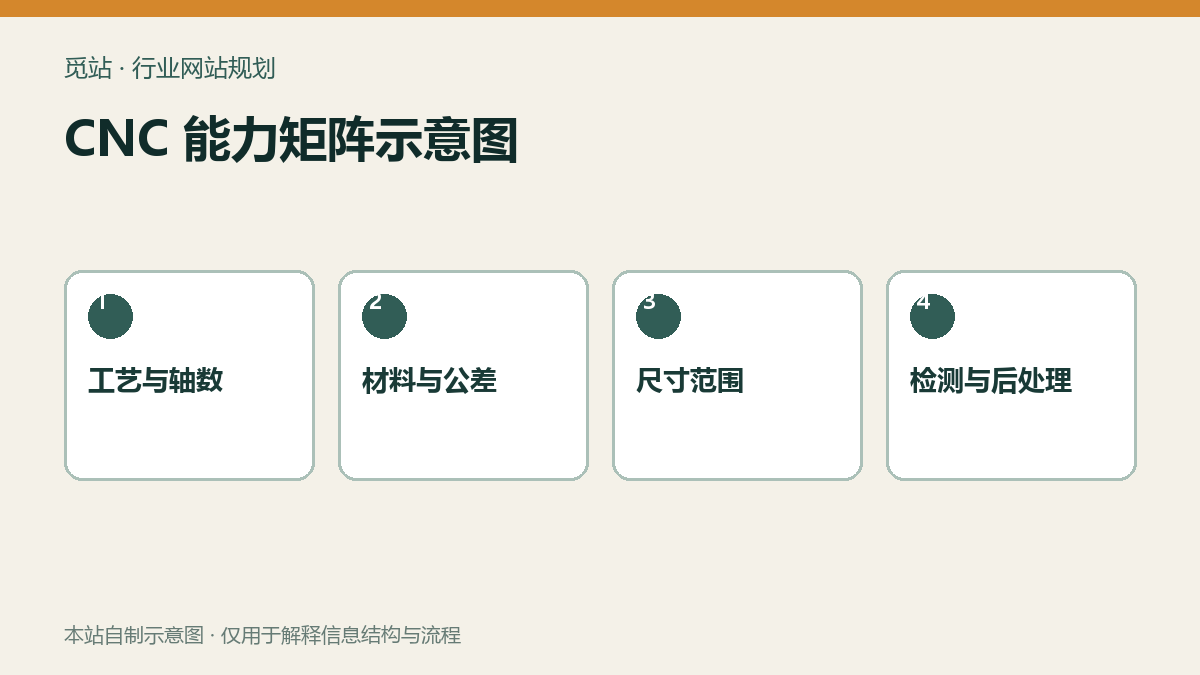
CNC Capability Matrix Diagram. Source: Self-made diagram by this site, used to illustrate the information structure and workflow of an industry website; no external image authorization required.
Use capability pages to capture process searches, and case study pages to prove results.
Capability pages are organized around processes such as CNC milling, turning, 5-axis, EDM, and grinding, clearly stating applicable parts, materials, dimensions, typical tolerances, and limitations. Case study pages document the problem, process route, key control points, inspection methods, and final results, while keeping client confidentiality. With only a list of equipment and no part evidence, it remains difficult for buyers to determine whether you have completed similar projects.
Tolerances, surface roughness, and lead times in case studies must come from publishable projects; do not fabricate uncertain data just to “appear professional.” Images should also use authorized photos of your own parts, with drawing numbers and client identifiers removed.
A Five-Step Approach to a Working Drawing RFQ
- First ask about process, material, quantity, target delivery date, and quality requirements.
- Clearly state accepted file formats, single file size limits, and compressed archive rules.
- Explain the purpose of files, retention period, and access permissions in the upload area.
- Restrict extensions on the server side, randomize file names, and isolate public download paths.
- After a successful submission, send a receipt with a unique number to both the client and sales, but do not attach sensitive drawings directly in the email body.
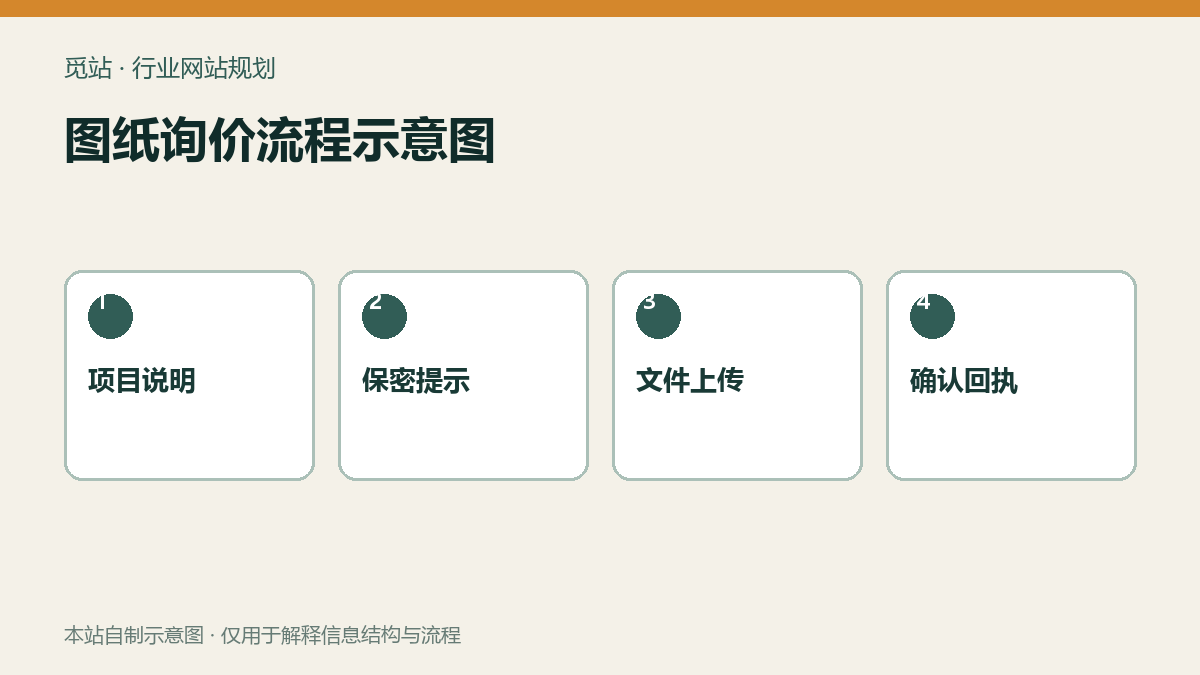
Drawing Inquiry Process Diagram. Source: Self-made diagram by this site, used to illustrate the information structure and workflow of an industry website; no external image authorization required.
A directory-style site fits custom machining better than a direct online store.
The price of custom machining depends on drawings, material, quantity, tolerances, surface finishes, and inspection requirements, so “buy now” is generally not suitable as the main workflow. WordPress can handle content, capabilities, and case display, while custom plugins manage inquiry status and file permissions; whether to develop a plugin should first consider whether the workflow can be covered by standard forms, with reference toWordPress Plugin Development Evaluation Method. If there are standardized consumables or fixed-specification samples, then use WooCommerce separately.
Pre-release Practical Checklist
- Does each capability page clearly state the scope of application and the boundaries of what cannot be done?
- Whether customer names, drawing numbers, and unauthorized data are removed from cases
- Are drawings impossible to guess and download via public URLs?
- Whether there is a backend record and reissue mechanism for inquiry notification failures
- Can users select files and see upload progress on mobile devices?
- Whether to follow before going liveForeign trade website checklistComplete real inquiry testing
Frequently asked questions
Does a CNC machining website need to display prices publicly?
Not needed for most custom parts. Public pricing tends to overlook differences in tolerances, materials, and quantities; it is more suitable to display capability boundaries and provide a structured RFQ.
Can customer drawings be forwarded directly as email attachments?
It is not recommended to leave sensitive drawings scattered in email for a long time. A safer approach is controlled storage, short-term access, and permission auditing, with emails only sending the inquiry number and a backend link.
Can it be launched without a large number of case studies?
You can first publish a small number of authorized typical cases, and supplement evidence with capability matrix, inspection process, and equipment scope; do not fabricate customers or processing results.
Join the discussion
You must log in to post a comment.
After logging in, you can join the discussion. New users can register an account for free.
Do not post spam comments, advertisements, or content with malicious links. Comments must comply with relevant laws, regulations, and community guidelines.